Why Strict Martial Arts are actually the most fun your child will have
The Discipline Myth: Why "Strict" Martial Arts Are Actually the Most Fun Your Child Will Have
![[HERO] The Discipline Myth: Why "Strict" Martial Arts Are Actually the Most Fun Your Child Will Have](https://cdn.marblism.com/2DNN-JaWmHb.webp)
Most parents hear "martial arts discipline" and think of stern instructors, rigid rules, and children standing at attention for hours. They imagine their child losing the spark of childhood joy in exchange for order.
Here's the truth: that's not what discipline looks like in a proper kids' martial arts class. And if you've been considering martial arts for your child in Frimley, Camberley, or Lightwater, you're not just looking for another after-school activity. You're looking for something that actually holds their attention whilst building real-world skills.
The irony? The structure you might worry about is exactly what makes martial arts the highlight of your child's week.
Why Kids Crave Structure (Even When They Say They Don't)
Let's be honest about what's happening in most children's lives right now. They're overstimulated. Between screens, unstructured play, and activities with no clear goals, many children are drowning in choice without direction.
That's exhausting for a developing brain.
Martial arts offers something radically different: clear expectations, achievable goals, and immediate feedback. Your child knows exactly what's expected. They can see their progress with every new technique mastered, every belt earned.
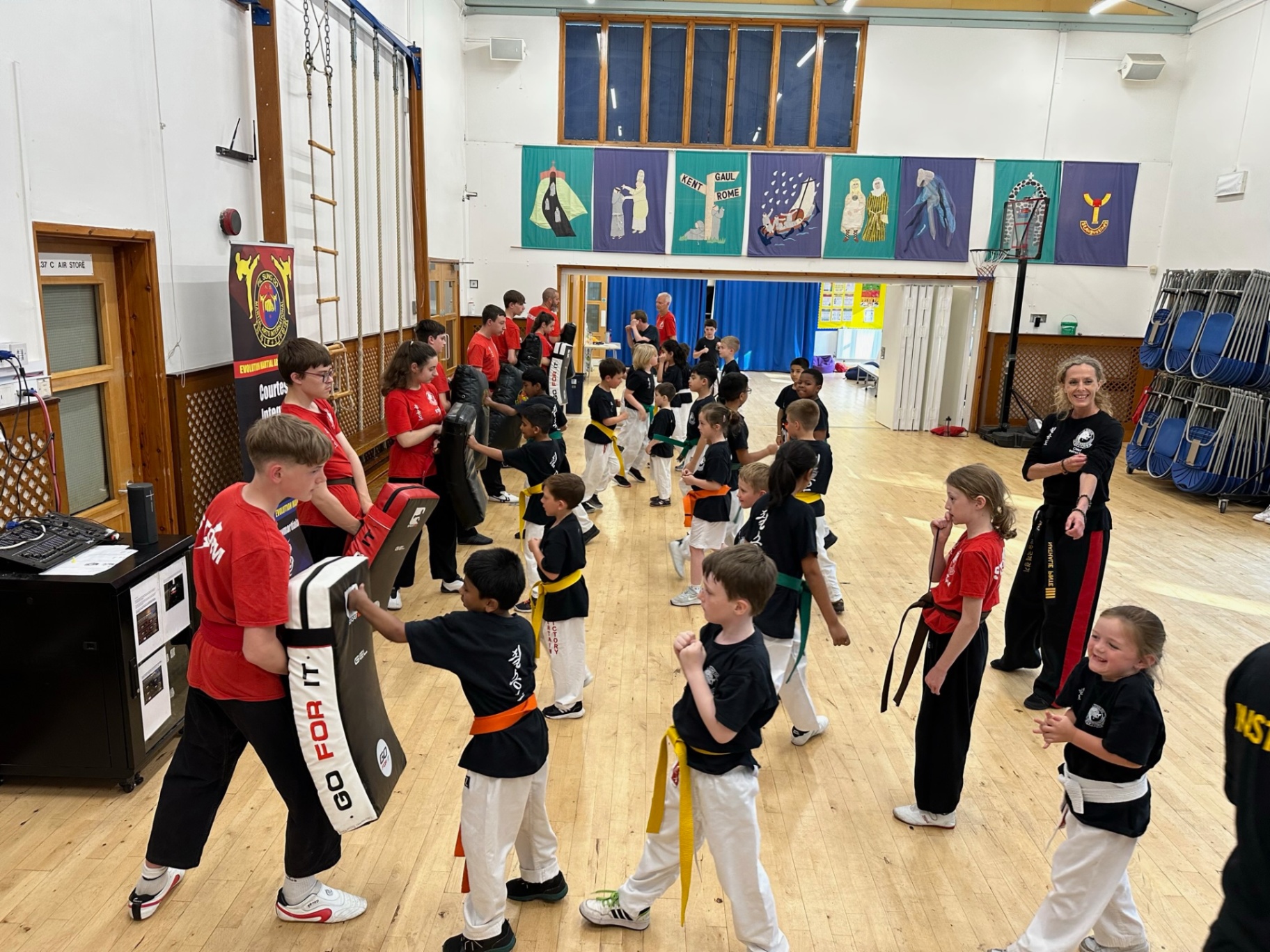
Research shows that when children understand discipline leads to success, it builds genuine confidence: and that confidence creates a positive cycle of engagement. They're not just following rules for the sake of it. They're following a process that demonstrably works, and children respond to that with enthusiasm.
Think about it: when was the last time your child stuck with something challenging purely because it was fun? The two aren't opposites. For children, mastery is fun. Seeing themselves improve is fun. Being part of something bigger than themselves is fun.
That's what martial arts discipline actually creates.
The "Strict" Class That Feels Like Play
Here's what happens in a well-run kids' martial arts class in our Frimley location: Your child walks in, bows, and immediately knows the routine. Warm-up games that disguise fitness as tag. Partner drills that feel like friendly competition. Technique practice where every attempt is met with specific, actionable feedback.
The structure isn't about control. It's about creating an environment where every child can succeed.
Unlike team sports where some children sit on the bench, or open play where naturally confident kids dominate, martial arts gives each child their own journey. The "discipline" means your child gets individual attention within a group setting. They're never lost in the crowd, and they're never left behind.
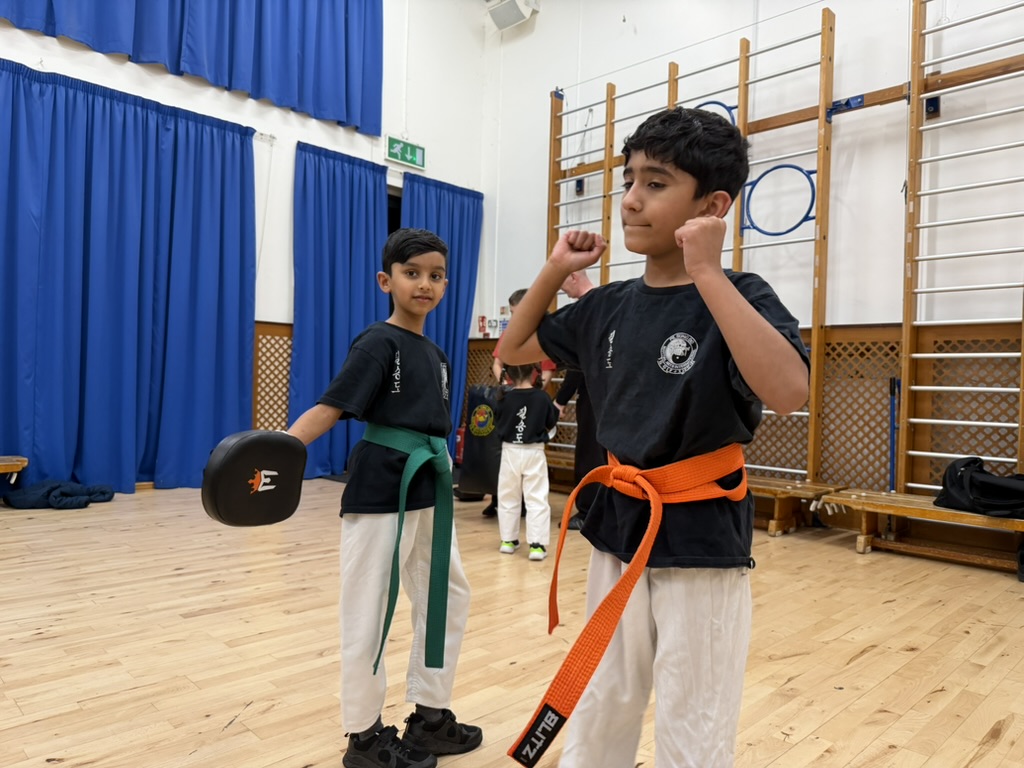
We hear from parents across Camberley and Lightwater constantly: "My child asks every day if it's martial arts day yet." That's not because the classes are loose and chaotic. It's because the structure creates psychological safety. Children know what to expect, they know how to succeed, and they know they'll be supported when they struggle.
The result? They can fully engage without anxiety about what's coming next or whether they're doing it "right."
What Discipline Actually Teaches (Beyond Following Instructions)
Strip away the misconceptions, and martial arts discipline is teaching your child something most activities miss: the connection between effort and outcome.
When your child practises a kick fifty times in class, they see improvement by attempt forty. That's not theoretical character building: it's concrete evidence that persistence works. They're not being told to "try harder" in abstract terms. They're experiencing, in real-time, that focused practice produces results.
This matters profoundly for children growing up in Frimley, Camberley, and Lightwater. Whether they're heading to local schools like Cordwalles or Tomlinscote, or growing up in our tight-knit communities, these children will face challenges that require persistence. Martial arts doesn't lecture them about resilience. It builds it, repetition by repetition.
Studies confirm what we observe in every class: children who train in martial arts develop better emotional regulation and mental clarity through structured practice. The "strict" environment: where they must wait their turn, control their movements, and manage their energy: is precisely what's training their prefrontal cortex to handle life's frustrations.
But they don't know that. They just know they feel capable and in control.
The Social Magic of Shared Standards
Perhaps the most underestimated aspect of martial arts discipline is what it creates socially. When every child in the class follows the same code: respect instructors, support training partners, celebrate others' success: something remarkable happens.
Cliques dissolve. Bullying has no oxygen. Your child learns to work with everyone, regardless of age, ability, or background.
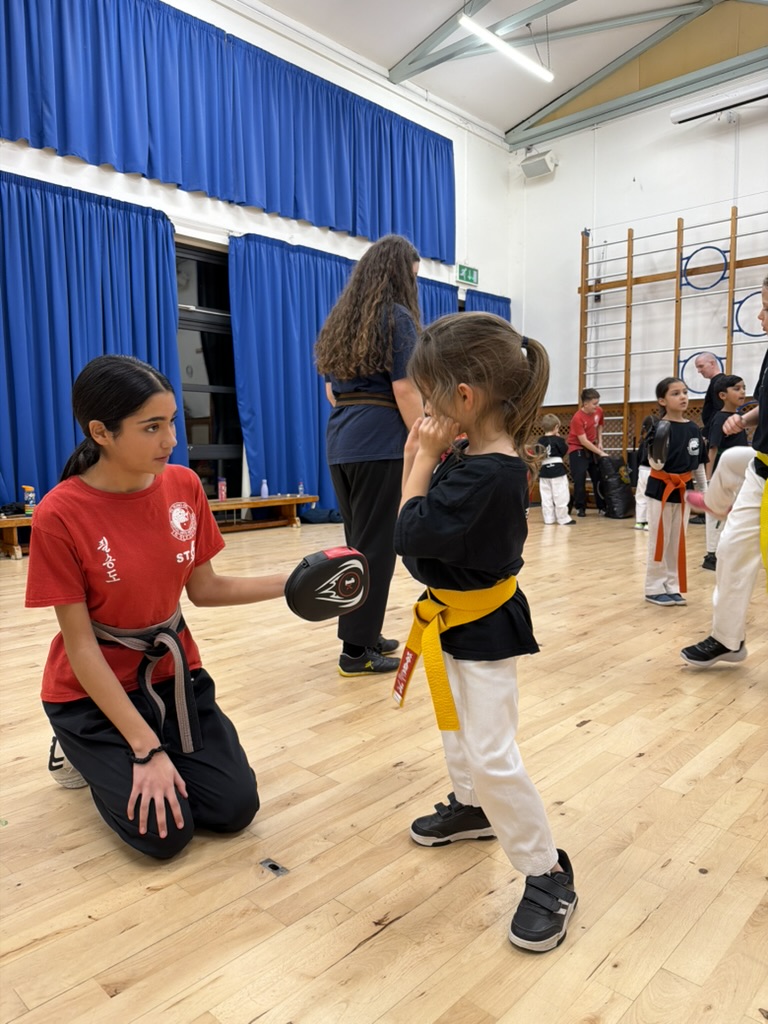
That shared structure means a shy seven-year-old and a confident ten-year-old can partner together with mutual respect. The discipline creates equality. No child is "better" than another in any way that matters: they're simply at different stages of the same journey.
For parents in our local area watching their children navigate friendship dynamics at school, this is transformative. Your child returns from class talking about their training partners with genuine warmth. They've experienced collaboration without competition, support without judgment.
The strict expectations: bow to your partner, thank them after drilling, celebrate their progress: aren't restrictions. They're the framework that makes real connection possible.
Why "Fun" Without Structure Often Fails Children
We're not suggesting unstructured play has no value. It absolutely does. But many modern children's activities offer entertainment without growth, stimulation without achievement.
Your child doesn't need another hour of distraction. They need experiences that challenge them appropriately, support them completely, and show them what they're capable of achieving.
Martial arts discipline does exactly that. The clear boundaries mean children can push themselves safely. The consistent feedback means they always know where they stand. The progression system means there's always a next goal within reach.
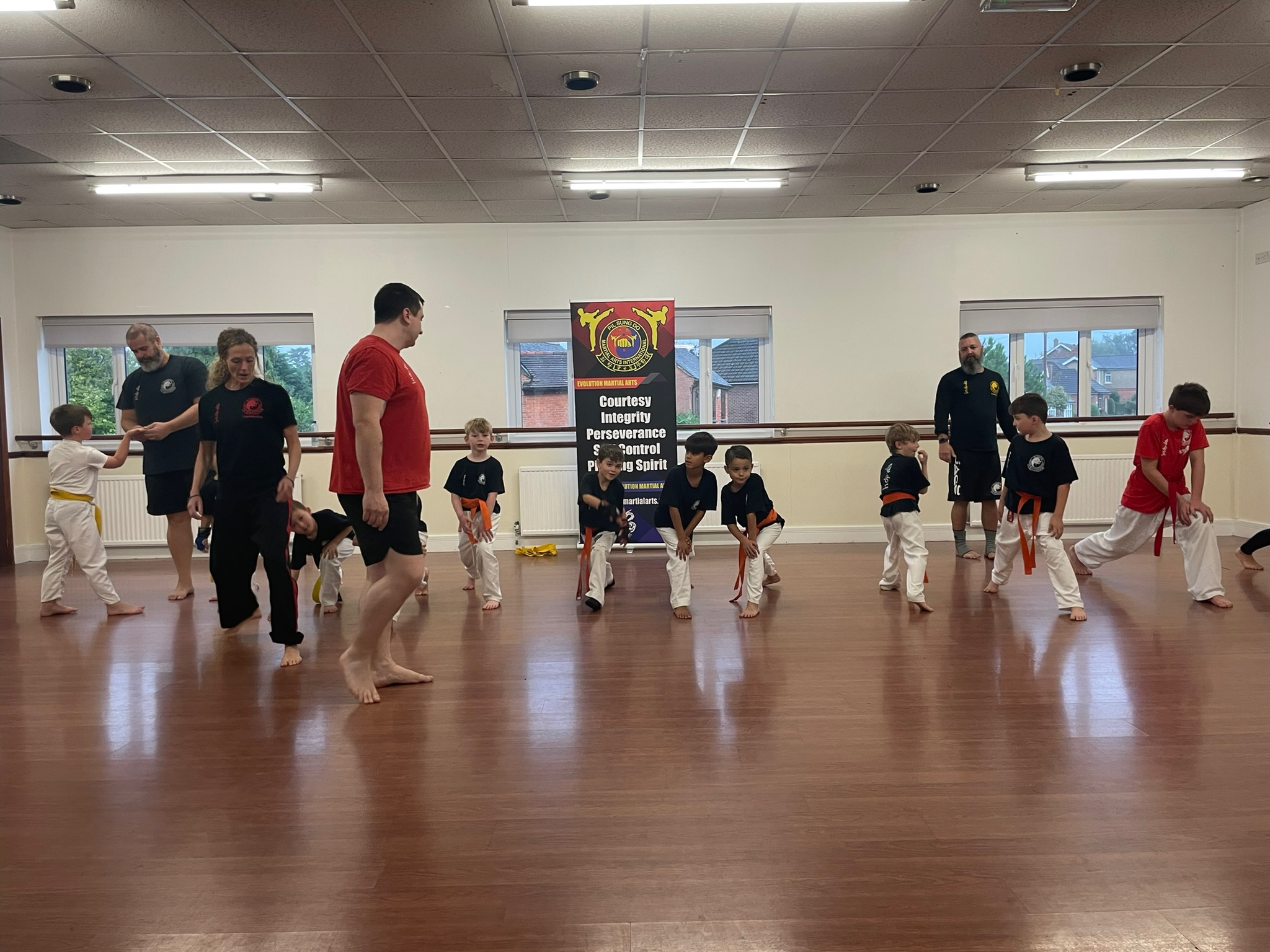
Compare this to typical after-school options around Frimley and Camberley. Many clubs focus purely on enjoyment in the moment, with no pathway for development. Others emphasise competition so heavily that only naturally athletic children thrive. Still others are so loosely structured that confident children dominate whilst quieter ones fade into the background.
Martial arts strikes the balance. It's fun because it's structured. It's engaging because it's challenging. It's inclusive because everyone follows the same standards.
What This Looks Like in Practice
Picture your child's first few weeks at Frimley Martial Arts. They're nervous, perhaps uncertain whether they'll fit in. They walk into a class of children from across Frimley, Camberley, and Lightwater: different ages, different abilities, different backgrounds.
Within minutes, they're part of something. Not because anyone made a special effort to include them, but because the structure includes them automatically. Line up by belt rank. Bow to your instructor. Follow the warm-up. Everyone does it, so your child does too.
Three weeks later, they're demonstrating a technique to a newer student. Six weeks later, they're testing for their first belt rank. Three months later, martial arts is the non-negotiable part of their week.
The discipline didn't dim their joy. It gave them a framework to experience mastery, belonging, and genuine confidence.
The Frimley, Camberley, and Lightwater Advantage
For families in our local area, there's something particularly valuable about martial arts discipline. Our communities are close-knit, with strong values around respect, perseverance, and mutual support. Martial arts amplifies exactly those values in a way children can understand and embody.
When your child from Camberley trains alongside a child from Lightwater, following the same code and pursuing the same goals, they're building connections that extend beyond the dojo. They're learning that shared standards create community, that discipline enables friendship, that structure supports growth.
These aren't abstract lessons. They're lived experiences your child has three times a week, surrounded by instructors who know their name and training partners who genuinely support their progress.
Making the Decision That Serves Your Child
If you've read this far, you're already convinced that your child needs more than passive entertainment. You're looking for an activity that builds character whilst genuinely engaging them. You want them to develop focus, confidence, and respect: not through lectures, but through practice.
Martial arts delivers exactly that. The discipline you might have worried about is precisely what makes it work.
The best way to see this in action? Bring your child in for a free trial class. Watch how the structure creates safety. Notice how the "strict" expectations actually help them relax and engage. See for yourself why children from Frimley, Camberley, and Lightwater consistently tell their parents that martial arts is the best part of their week.
Your child doesn't need another distraction. They need an environment where they can discover what they're capable of becoming.
Book your child's free trial class today and discover why discipline is the best gift you can give them.